
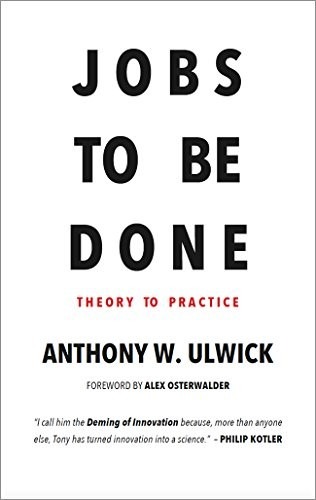
Jobs to Be Done
The job stays stable; solutions evolve.
Metadata
| Author | Stephen Wunker, David Farber, Jessica Wattman |
| Year | 2016 |
The Book in 3 Sentences
- Customers hire products to make progress. The job stays stable; solutions evolve.
- Define success as measurable outcomes. Innovation improves specific desired results (time, risk, accuracy).
- Target unmet needs systematically. High-importance, low-satisfaction outcomes reveal real opportunity.
- Segment by job, not demographics. Context and struggle matter more than age or income.
How the Book Changed Me
I re-read this book after reading Competing Against Luck (confession - I listened during my drive, and reviewed in my Kindle after I was on my phone). Although similar narrative.. it made me rethink my product strategy. Instead of thinking about a specific feature, I should be going back to the drawing room about the “jobs” — What do users care about deeply but are poorly served on? Things like..
Or what are the specific steps that they are trying to accomplish they don’t even realize?
My Top 3 Quotes
- Customers don’t buy products or services; they hire them to get a job done
- The job is stable; solutions change
- All customers want products that help them get a job done better
Summary + Notes
- Most innovation fails because companies don’t understand what customers are trying to accomplish. They rely on ideas, trends, or features instead of clearly defined jobs.
→ Innovation fails from poor problem definition.
- A job is the progress a customer is trying to make in a circumstance. Jobs are stable over time, even as solutions evolve.
→ Focus on the job, not the product category.
- Companies confuse jobs with products. A drill is not the job — “making a hole” is. Solutions change; jobs don’t.
→ Separate the goal from the tool.
- Jobs can be broken into precise, measurable desired outcomes (e.g., minimize time, reduce likelihood of error, increase predictability).
→ Good innovation is about improving specific outcomes.
- Customers rate outcomes by importance and satisfaction. High importance + low satisfaction = opportunity.
→ Innovation can be quantified.
- Segmentation by job: Instead of demographics, segment customers by how they execute the job and what outcomes they struggle with.
→ Behavior and context matter more than age or income.
- Once unmet outcomes are identified, teams design solutions specifically to improve them. → you’re targeting gaps.
- When you systematically target underserved outcomes, growth becomes less random and more repeatable.
→ Competing against luck means competing against unmet needs.