
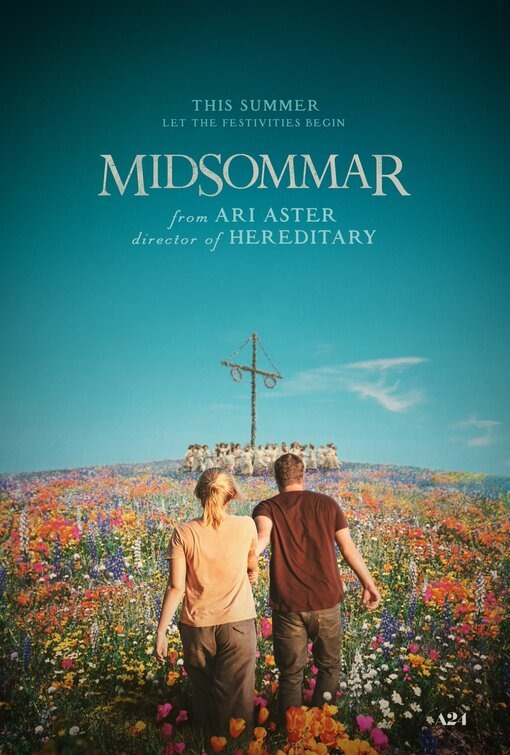
Midsommar
What begins as an idyllic Swidish summer festival turns into gory and bizarre pagan cult.
Metadata
| Director | Ari Aster |
| Year | 2019 |
| Writer | Ari Aster |
| Stars | Florence Pugh, Jack Reynor, William Jackson Harper |
The Movie in 3 Sentences
Dani, a grieving young woman who travels with her boyfriend and his friends to a remote Swedish festival. What begins as an awkward group trip slowly turns into a bright, ritualized nightmare. The horror is especially unsettling because it unfolds almost entirely in daylight, surrounded by flowers, smiles, white clothing, and an overwhelming sense of communal warmth.
The movie is just so beautiful. The green fields, elaborate floral arrangements, group dances, embroidered costumes, and endless summer light create an almost impossibly picturesque version of the Midsommar festivities. That beauty makes everything that follows feel even more grotesque. The violence and rituals are horrifying on their own, but seeing them happen in such a cheerful, idyllic setting makes them feel even more absurd and disturbing.
What I liked most is that the horror is really just the surface. Underneath it, the film is about grief, anxiety, emotional dependency, and the fear of being abandoned. Dani begins the story clinging to a relationship that has already emotionally ended because losing it feels like losing the last bit of stability she has left. The community she encounters is terrifying, but it also gives her something she desperately wants: people who mirror her emotions, share her pain, and make her feel like she belongs.
That is what makes the ending so strangely cathartic. Midsommar is ultimately a twisted story about letting go—of a relationship, of isolation, and of the need to be loved by someone who no longer truly loves you. Aster turns that emotional breakup into a psychedelic folk-horror ritual, making the film both deeply disturbing and, in its own warped way, strangely liberating.