
Books·
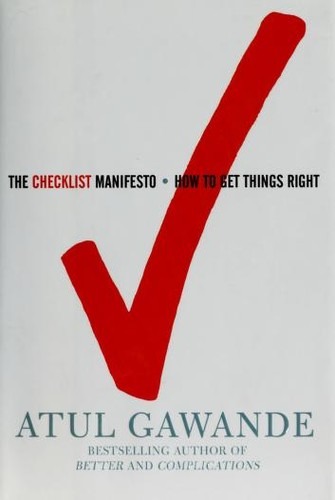
The Checklist Manifesto
Smart people miss steps; checklists turn chaos into reliable, repeatable wins
Metadata
| Author | Atul Gawande |
| Year | 2009 |
The Book in 3 Sentences
- Complexity causes failure, not ignorance. Even experts miss basic steps when systems become too complicated.
- Simple checklists prevent catastrophic mistakes. Short, well-designed lists improve reliability and outcomes across industries.
- Discipline beats ego. Modern success depends on structured teamwork, not individual brilliance.
How the Book Changed Me
- I often miss important steps in design—like accessibility—not because I lack awareness, but because there are too many factors to juggle at once. This book made me realize I shouldn’t rely on memory alone; I need a simple checklist, especially for accessibility, to make sure the fundamentals are always covered before calling a design complete.
- We already have a good practice of checklist in personal life, but could be more rigorous when it comes to more high-pressure situation.
My Top 3 Quotes
- The volume and complexity of what we know has exceeded our individual ability to deliver its benefits correctly, safely, or reliably.
- The problem is not incompetence. The problem is complexity.
- Checklists seem able to defend anyone, even the experienced, against failure in many more tasks than we realized.
- The real lesson of the checklist is that under the right circumstances, a dumb tool can beat smart people.
Summary + Notes
- Modern systems (medicine, aviation, construction) are too complex for memory alone. Experts fail not because they lack knowledge, but because complexity overwhelms them.
→ Knowledge isn’t enough. Execution fails.
- Gawande introduces checklists used in aviation. Pilots rely on them even after decades of experience.
- The End of the Master Builder: In the past, one person oversaw everything (like a “master builder”). Today, work is specialized and distributed.
→ Coordination failures are the biggest modern risk.
- The World Health Organization develops a surgical safety checklist. It includes simple steps like confirming patient identity and team introductions.
- The surgical checklist is tested globally. Results: major drops in complications and deaths.
- How to build a good checklist:
- Ego is often the barrier to safety.
- The myth of the lone genius is outdated. Modern heroism is disciplined teamwork.
- A story of checklists used in investing (hedge funds). They prevent cognitive errors and emotional decisions.