
Films·
The Grand Budapest Hotel
The most Anderson movie - a love letter to beautifully orchestrated chaos
Metadata
| Director | Wes Anderson |
| Year | 2014 |
| Writer | Wes Anderson |
| Stars | Ralph Fiennes, F. Murray Abraham, Mathieu Amalric |
The Movie in 3 Sentences
- Monsieur Gustave, a legendary hotel concierge, and Zero, his young lobby boy, are swept into a murder investigation after one of Gustave's wealthy guests dies and leaves him a priceless painting. As Gustave and Zero flee police, outrun a ruthless family, and navigate a Europe on the brink of war, the film unfolds as a fast-paced adventure filled with heists, prison breaks, secret societies, and deadpan comedy.
- Beneath its whimsical humor, the movie is a meditation on how friendship, kindness, and beauty can endure even as history moves toward violence and upheaval. Wes Anderson treats manners, style, and hospitality almost like small acts of resistance against brutality. Its melancholy idea is that some worlds survive only because someone remembers them carefully.
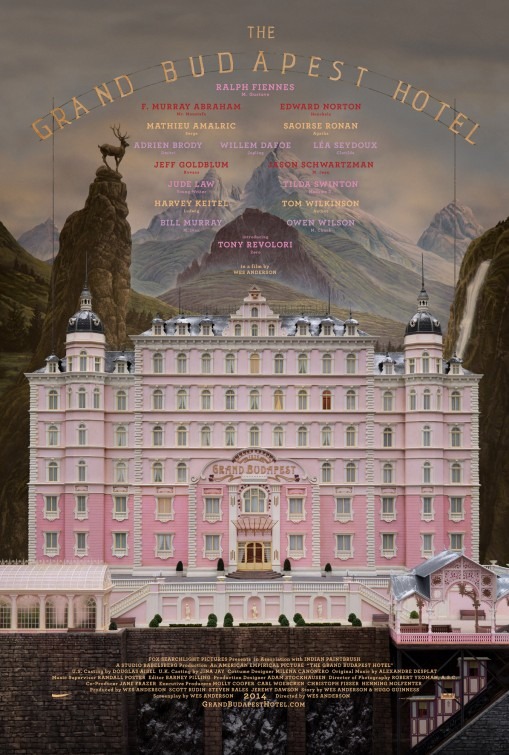
- Typical Anderson movie - highly symmetrical, colorful, and storybook-like, with pastel hotels, miniature landscapes, precise framing, and theatrical camera movement. Anderson shifts aspect ratios to mark different time periods, making the film feel like a nested memory box. Just gotta love his mastery of visual technicality.
My Top 3 Quotes
- M. Gustave: You see, there are still faint glimmers of civilization left in this barbaric slaughterhouse that was once known as humanity. Indeed that's what we provide in our own modest, humble, insignificant... oh, fuck it.
- M. Gustave: Rudeness is merely an expression of fear. People fear they won't get what they want. The most dreadful and unattractive person only needs to be loved, and they will open up like a flower.