
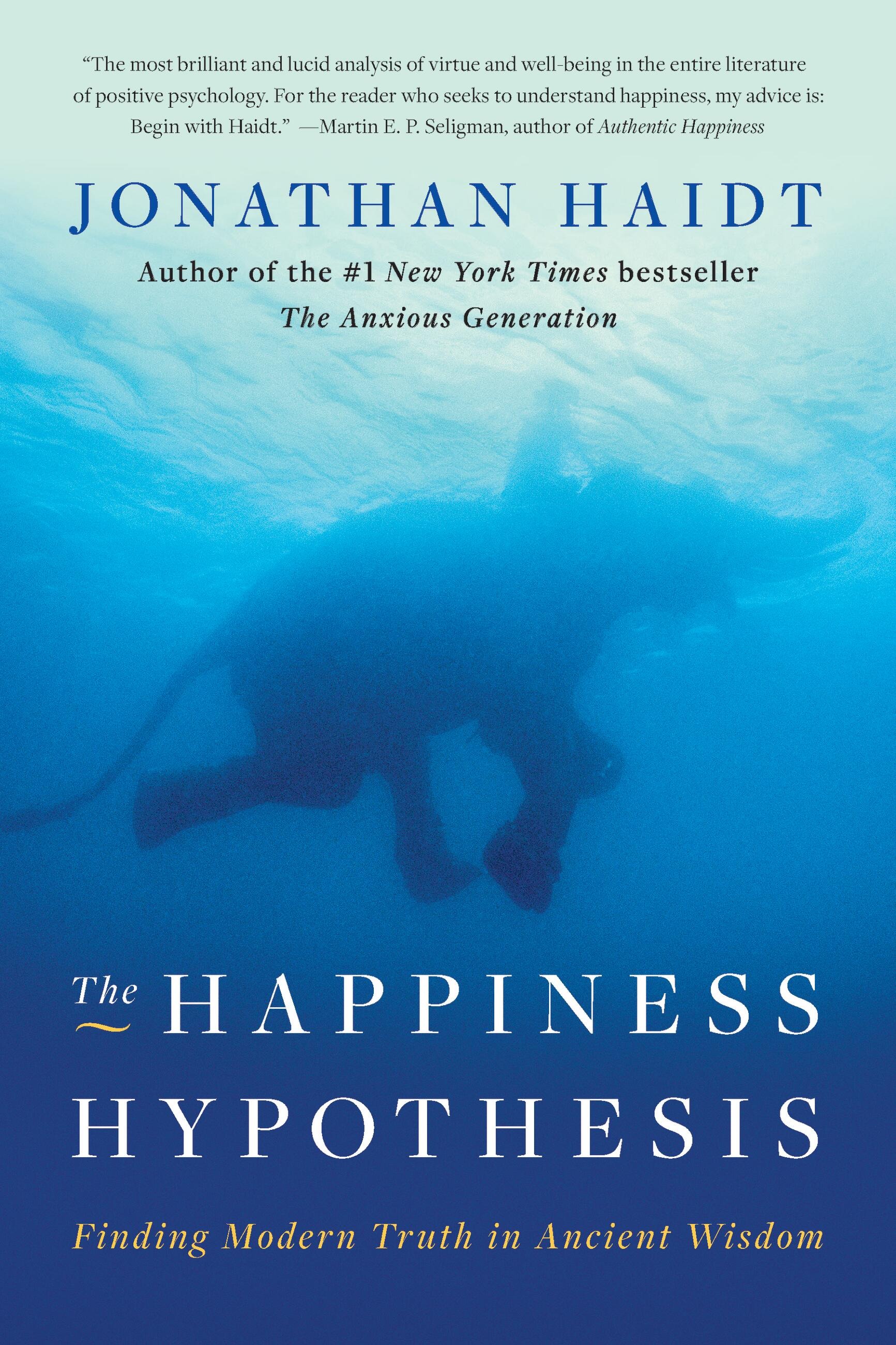
The Happiness Hypothesis
Happiness comes from balance, relationships, and training your emotional mind.
Metadata
| Author | Jonathan Haidt |
| Year | 2006 |
The Book in 3 Sentences
- Emotions (the “elephant”) drive you more than logic (the “rider”). Real change comes from training habits, thoughts, and emotional responses — not just reasoning.
- Close social bonds are one of the strongest predictors of lasting happiness. Success without connection won’t satisfy you.
- Pleasure fades. A life aligned with values, purpose, and contribution creates deeper, more durable well-being.
How the Book Changed Me
- There are three factors that control how happy one is - genetics, external circumstances, and your response. You can’t really change the first two, but you can influence how you respond.
My Top 3 Quotes
- We are not simply rational creatures; we are creatures whose reasoning is often driven by our passions.
- The keys to happiness are within us, but they must be unlocked by living in the right way.
- Adversity can strengthen people — but only if it is the right kind of adversity.
Summary + Notes
1. The Divided Self
We have conflicting impulses (desire vs. discipline, anger vs. compassion). Happiness comes from integration of emotion and thoughts, consciousness and subconsciousness — not suppression.
- Change Your Mind
Cognitive therapy works because thoughts influence emotions. Ancient Stoics were onto something.
- Reciprocity and Social Bonds
We are ultra-social creatures. Close relationships are one of the strongest predictors of happiness. If your relationships are weak, productivity won’t compensate.
- Adversity and Growth
Suffering can produce growth — but not automatically. Resilience comes from meaning-making, not pain itself.
- The Happiness Formula
Happiness = Set point + Conditions + Voluntary activities
- Set point: Your genetic baseline
- Conditions: External circumstances
- Voluntary activities: What you intentionally do
You can’t fully control happiness — but you can influence it.
- Meaning vs. Pleasure
Pleasure fades quickly (hedonic adaptation). Lasting happiness comes from - purpose, engagement, relationships, being part of something larger than yourself